
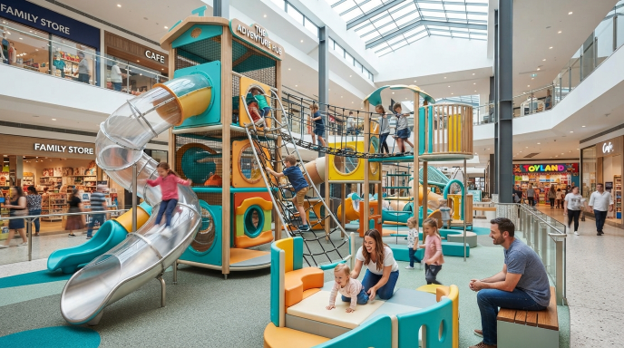
Modern shopping centres must offer more than stores, dining, and convenient parking. Well-designed playground equipment for shopping centres can turn ordinary visits into memorable family experiences. Children gain a dedicated place to play, explore, and connect. Meanwhile, parents can relax, socialise, or extend their shopping time. Consequently, a thoughtful play area strengthens customer satisfaction and long-term loyalty.
Why Family-Friendly Shopping Centres Stand Out
Families often choose destinations that make daily activities easier and more enjoyable. Therefore, a child-friendly environment can influence where parents shop. A quality playground adds practical value without changing the centre’s main purpose.
Moreover, play areas create an immediate sense of welcome. Children see an exciting activity, while adults recognise a centre designed around family needs. As a result, the whole property feels more inclusive and customer-focused.
Shopping centres also compete with online retailers for attention. However, digital stores cannot provide shared physical experiences. A creative playground gives families another reason to visit in person. Ultimately, that experience makes the centre more memorable.
How Play Areas Increase Customer Dwell Time
Longer visits create more opportunities for browsing, dining, and purchasing. Therefore, shopping centre managers often seek features that encourage comfortable dwell time. A playground supports this goal naturally.
Parents may plan a play break between errands. Alternatively, they may reward children after completing essential shopping. Either approach extends the visit without making customers feel pressured.
Meanwhile, nearby cafés and seating areas can serve accompanying adults. Families may purchase drinks, snacks, or meals while children enjoy supervised play. Consequently, surrounding retailers can benefit from increased activity.
Proludic describes shopping centre playgrounds as strategic assets supporting dwell time and customer experience. (Proludic Australia) Therefore, play should form part of the wider retail journey.
Choosing Equipment for Different Age Groups
A successful playground should serve the centre’s main customer groups. First, planners must understand local family demographics. Then, they can select activities for different ages and abilities.
Toddlers benefit from low-level equipment, gentle movement, sensory panels, and simple role-play features. Meanwhile, older children often prefer climbing, balancing, sliding, and active challenges.
However, equipment should not create unsafe conflicts between age groups. Separate activity zones can reduce congestion and support confident play. Additionally, clear sightlines help parents supervise children from nearby seating.
A balanced design may include climbing structures, slides, springers, tunnels, and interactive panels. Furthermore, themed elements can create stronger visual interest. Every feature should support purposeful, enjoyable play.
Designing an Inclusive Retail Playground
Inclusive play welcomes children with different physical, sensory, and social needs. Therefore, accessibility should influence the entire layout. It should never appear as a minor addition.
Wide routes can support wheelchairs, mobility aids, and prams. Likewise, ground-level activities allow more children to participate together. Sensory panels, musical features, and tactile surfaces can offer varied experiences.
Quiet spaces also provide relief from busy retail surroundings. Some children need calmer areas before joining active play. Consequently, a well-zoned playground can support energetic and reflective activities.
Moreover, inclusive seating helps parents, grandparents, and carers remain comfortable. The result feels more welcoming for the complete family group.
Matching the Playground With the Centre’s Brand
Every retail destination has a distinct identity. Therefore, playground design should complement the centre’s architecture, audience, and brand positioning. A disconnected design may look temporary or poorly planned.
For example, a coastal centre could use maritime themes, blue tones, and imaginative ship structures. Alternatively, a nature-focused development could feature timber textures, animals, and landscape-inspired forms.
Custom colours can also reflect existing branding. Meanwhile, themed signage and decorative panels can reinforce the environment. Consequently, the play area becomes part of the property’s visual story.
Proludic designs playgrounds for indoor malls, open-air plazas, retail parks, and other commercial settings. (Proludic Australia) This flexibility helps centres create relevant, site-specific experiences.
Creating Safe and Comfortable Play Spaces
Safety remains essential in every commercial playground. Therefore, equipment selection must consider age suitability, fall zones, surfacing, access, and maintenance.
Clear entrances help carers monitor movement. Additionally, secure fencing can separate play areas from roads, car parks, and busy walkways. Good lighting also supports visibility during evening trading hours.
Impact-absorbing surfacing can reduce injury risks around active equipment. Meanwhile, shaded areas protect families during warm conditions. Suitable drainage also keeps outdoor spaces cleaner after rain.
Furthermore, seating should provide direct views across key play zones. Parents should not need to move constantly for supervision. As a result, adults can feel calmer and more comfortable.
Proludic states that its equipment receives independent conformity testing against EN 1176 standards. (Proludic Australia) However, site operators must still maintain inspections and repairs.
Planning Indoor and Outdoor Playground Solutions
Indoor playgrounds offer reliable access throughout changing weather. Therefore, they work well near food courts, family lounges, and major retailers. Compact structures can also suit limited floor areas.
However, indoor designs must consider ceiling height, circulation, noise, and emergency access. Soft visual boundaries can organise the space without creating an enclosed feeling.
Outdoor playgrounds provide more freedom for larger structures and active movement. Additionally, landscaping can improve shade, comfort, and visual appeal. Open-air play may also complement dining precincts.
Nevertheless, outdoor materials must withstand sunlight, rain, heavy use, and local conditions. Therefore, durability should guide every product choice.
Some centres can combine indoor and outdoor options. Consequently, families receive engaging play opportunities across different seasons and shopping zones.
Building Repeat Visits and Customer Loyalty
Positive family memories can shape future destination choices. Therefore, an enjoyable playground may encourage customers to return more often. Children remember places where they felt engaged and welcome.
Meanwhile, parents value centres that reduce stress during longer outings. A safe play break can improve the complete shopping experience. Consequently, families may recommend the destination to others.
Seasonal events can further activate the playground. For example, centres can host family mornings, themed activities, or supervised sessions. These events create fresh reasons to revisit.
Moreover, attractive playground content can strengthen local awareness through social media. However, centres should always follow suitable consent and privacy practices.
Turning Shopping Trips Into Family Experiences
The best shopping centre playgrounds combine safety, accessibility, play value, branding, and commercial planning. Therefore, they support families and retail operators.
Children gain opportunities for movement, imagination, and social interaction. Meanwhile, adults enjoy a more relaxed and convenient visit. Nearby businesses may also receive stronger foot traffic and engagement.
Ultimately, quality playground equipment can transform unused space into a valuable family destination. It can encourage longer visits, improve comfort, and strengthen customer loyalty. Therefore, centres should treat play as an essential part of the retail experience.